
Series Hybrids: The Future Tesla Doesn’t Want You to Know About
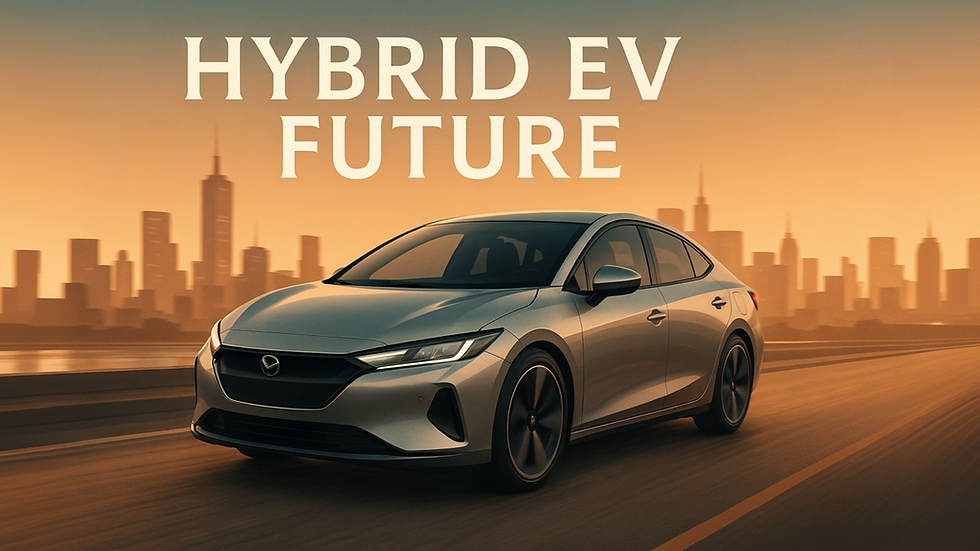
Edison Motors is hitting a wall right now — and it’s not because of their technology. It’s because of the rules.
Canada’s environmental regulators (and soon the EPA and CARB here in the U.S.) have made it official: by 2035, all vehicles must be either hybrid or all-electric. Sounds futuristic, right? Cleaner air, modern fleets, an end to gas-guzzling trucks. But buried in the fine print is a big problem: the mandate only recognizes parallel hybrids.
And if you’re thinking, wait, what about series hybrids? …yeah. Regulators left them out entirely.
That means one of the most efficient, proven, and practical configurations in transportation today doesn’t even have a path forward. No standards. No test procedure. No approval stamp. Edison Motors is stuck in limbo — not because their trucks don’t work, but because the paperwork wasn’t written for anything outside of Toyota Prius logic.
Parallel vs Series Hybrids – Why It Matters
Most hybrids on the road today are parallel hybrids. The engine powers the wheels, sometimes with help from an electric motor, sometimes without. But the gas engine is always tied to the drivetrain. That’s the hybrid design regulators understand, because it’s been around since the early 2000s. And honestly, it hasn’t evolved much.
A Prius today? Roughly the same mileage as a Prius 15 years ago.
Now, a series hybrid is a completely different animal. The gas or diesel engine never touches the wheels. Instead, it acts as a generator, running at a single efficient RPM to keep a battery charged. The battery then powers the motors, and the motors do all the driving.
This simple shift changes everything:
🚛 Range Anxiety? Gone. Refuel with gas or diesel in minutes and keep rolling.
🔋 EV Fun? Still there. Instant torque, smooth ride, tech-heavy experience.
⛽ Efficiency? Off the charts. Imagine 1,000 miles on a single tank of fuel.
🛠 Conversions? Possible. Existing fleets could be retrofitted instead of scrapped.
If that sounds familiar, it’s because trains have used this exact setup for decades. Ask any train buff — diesel-electric series engines are the backbone of freight transport worldwide. Reliable. Efficient. Proven.
So why are we ignoring it for cars and trucks?
Why Edison Motors Is Stuck in Limbo
Here’s where it gets ridiculous. To certify a hybrid, regulators require emissions testing across different RPMs — high, low, idle, acceleration. Makes sense for a parallel hybrid, where the engine is constantly revving.
But a series engine doesn’t do that. It runs steady at one constant RPM, quietly generating DC power for the battery. It’s efficient. It’s clean. But it doesn’t fit the existing test.
It’s like trying to grade a treadmill by asking it to do jumping jacks. The testing procedure simply wasn’t designed for this.
So Edison Motors is left waiting. Not because their trucks don’t work, not because their emissions are worse — but because the rulebook doesn’t know what to do with them.
Why This Should Matter to You
It’s easy to think this is just a “big rig problem,” but it’s much bigger than that. Utilities, water companies, construction fleets — all are being forced into all-electric solutions. On paper, that sounds great. In reality? We don’t have the charging infrastructure. Not even close.
Imagine a lineman heading to repair a downed power line and needing to stop for three hours at a charging station. Or a water utility hiring extra staff just to rotate trucks in and out of chargers overnight. Those costs? They don’t just vanish — they land on your monthly bills.
And let’s talk about those chargers for a second. A future full of trucks pulling 600 to 1,000 kW DC fast charges? That’s the kind of current that powers entire neighborhoods being pumped into a single vehicle. The safety implications alone should make us pause.
Series hybrids solve this. They allow fleets to run further, tow heavier, and convert existing vehicles — all while cutting emissions dramatically. It’s not about rejecting EVs; it’s about giving us a bridge technology that makes sense until infrastructure catches up.
Tesla, This One’s Gonna Sting
Of course, there’s another reason series hybrids aren’t getting attention: they’re a direct threat to the EV narrative.
Take the Tesla Semi, for example. Great concept — until you hook up a trailer and watch the range vanish. Two hours at a Supercharger while your freight sits waiting? Not ideal.
A series hybrid truck, on the other hand, refuels in minutes, drives 1,000 miles, and still gives you the electric driving experience. No charging network required. No waiting. Just results.
Let’s just say, a future full of series hybrids would hurt Tesla more than Elon’s latest political hot take on Twitter — sorry, X.
The Next Evolution in Transportation
The truth is, series hybrids are the logical next step. They:
Give us EV benefits without EV compromises.
Provide a path to convert existing fleets affordably.
Reduce emissions without creating impossible infrastructure demands.
Keep costs stable for consumers, utilities, and businesses alike.
The technology is proven. The only thing holding it back is legislation written for the last generation of hybrids.
What You Can Do
Edison Motors is pushing forward, but they can’t do it alone. If we want series hybrids on the road, we need standards. We need the EPA, CARB, and Canada’s regulators to wake up and realize innovation doesn’t always fit the old test procedure.
So here’s my ask:
Watch Edison Motors’ latest video on this topic (link below).
Share this blog with friends, colleagues, or anyone who cares about the future of transportation.
Reach out to your representatives. Tell them you support series hybrids and want testing standards created.
Because this isn’t about choosing between gas or electric. It’s about building a smarter middle ground — one that gives us reliability, affordability, and a clean path forward.
Final Thoughts
If we get this right, we’re not just building trucks and cars. We’re building stability. We’re building a transportation system that works for businesses, utilities, and everyday families.
Series hybrids aren’t a step backwards — they’re the leap forward we’ve been waiting for.
Let’s build that future here in America. Let’s make vehicles that travel 1,000 miles on a tank, tow without compromise, and keep costs down for everyone.
The future doesn’t have to be “all or nothing.” It just has to be smarter.
Inspired by Edison Motors — watch their video here: https://youtu.be/2LLXyjTnNdg
For more insights on clean transportation tech, visit www.reinnovations.org.


